
What Is AI in 2026? A Simple Explanation That Makes Sense
AI is everywhere in 2026, but the core idea is simpler than the hype. When people ask what is AI in 2026, they usually mean software built on foundational AI principles and the evolution of machine learning. This software uses machine learning to learn patterns from data, then applies those patterns to predict, sort, generate, recommend, and automate work.
That sounds big because it is. Still, it helps to keep one simple idea in mind before anything else: today’s AI feels smart, but it does not think like a person. Once that clicks, the rest gets much easier to understand.
Key Takeaways
- AI is pattern prediction at massive scale: In 2026, AI software learns from huge datasets to generate text, images, predictions, and actions, but it does not think or understand like a human.
- Strengths in speed and versatility: Excels at summarizing, drafting, coding, translating, and multimodal tasks across text, images, voice, and video, powering everyday tools and productivity gains.
- Common pitfalls remain: Can hallucinate facts, carry biases from training data, and lack real-world judgment, so verify outputs for high-stakes decisions.
- Integrated into daily life: From email replies and search to business agents and personal devices, AI boosts efficiency while ethical frameworks guide safe deployment.
What Is AI in 2026? Key FAQs
What is the simplest definition of AI in 2026?
In 2026, AI, particularly generative AI powered by large language models, is software that analyzes massive amounts of data to identify patterns, which it then uses to generate new outputs like text, images, predictions, or automated tasks.
Does AI think like a human?
No. While AI tools can feel intelligent and conversational, they do not possess awareness, common sense, or real-world experience. They rely on probability and pattern prediction rather than human reasoning.
What are the primary strengths of modern AI?
AI excels at tasks involving large datasets and clear goals, such as summarizing information, drafting content, coding, translating languages, and performing complex classification or predictive analysis.
Why do AI tools sometimes make mistakes?
AI models can “hallucinate” or make up facts because they prioritize generating statistically likely responses over checking for factual accuracy. They are also subject to biases present in their training data.
How is AI safety and ethics managed in 2026?
AI governance frameworks and ethical AI principles guide development to address cybersecurity threats and improve deepfake detection, promoting responsible and secure AI deployment.
What AI is in 2026, in simple terms
AI in 2026 is software that finds patterns in huge amounts of data and turns them into useful outputs. Those outputs might be text, images, speech, forecasts, search results, or suggested actions. These systems still follow foundational AI principles regarding data processing. In plain English, AI looks at what usually goes together, then makes a best next guess.
Most AI today does not have human-like awareness. It does not have a life story, common sense, or real-world experience. What it has is scale. It can process more examples, more quickly, than older software ever could.
AI runs on pattern prediction at scale
A lot of familiar tools have used this basic idea for years. Common examples include:
- Email spam filters: Learned what junk mail looks like.
- Maps: Predicted the fastest route based on traffic patterns.
- Streaming apps: Guessed what you might want to watch next.
- Phone keyboards: Offered the next word before you finished typing.
Modern AI does the same kind of work, but with far more range. Instead of only spotting spam or suggesting a song, it can write a draft, answer a question, make an image, transcribe a meeting, or help with code where developers use vibe coding and repository intelligence to build applications faster. The engine under the hood is still pattern prediction, only broader and more flexible.

Newer AI tools feel more natural for a few reasons:
- Improved models: They learned from far larger sets of text, images, audio, and video.
- Hardware efficiency: Enhanced chips allow tools to respond in seconds instead of minutes.
- Conversational interfaces: Users can interact via plain language rather than clicking through rigid menus.
- Multimodal AI: Some tools can work across text, images, voice, video, and software tasks in one place.
What modern AI can actually do well right now
Modern AI excels when a task offers plenty of examples and a clear goal, especially with the shift toward agentic AI. If the job involves summarizing, classifying, rewriting, comparing, detecting, predicting, or drafting, AI delivers strong results. That explains its presence in countless everyday tools, including AI agents that go beyond text generation to take real actions.
It can create drafts, summarize information, and answer questions fast
Speed stands out as one of AI’s top strengths, driving significant productivity gains across fields. Feed it notes, and it produces a summary in seconds. Share a rough idea, and it drafts an email, outlines a blog post, translates a paragraph, or explains a topic at various reading levels. Researchers now use generative AI to accelerate scientific discovery, from hypothesizing to distilling massive datasets.
This speed aids research and support roles too. Students turn to AI tutors for practice. Developers rely on it to explain code or catch simple bugs. Companies deploy it for customer support, meeting notes, and knowledge-base searches, often through AI agents that manage complex workflow orchestration instead of isolated tasks. The strongest outcomes arise when people provide precise instructions and review the results.
If you want to see how these tools appear in creative work, this guide to best tools blending AI with content creation offers practical examples.

It can see, hear, and work across different types of content
A key reason AI seems more capable in 2026 lies in its multimodal nature. That allows one system to handle various inputs within the same process. It reads text, examines images, processes audio, and even analyzes video.
For instance, upload a photo and ask what it shows. Speak to a voice assistant for a spoken reply. A business can review a call recording, extract main points, and draft a follow-up email. This versatility counts because real life mixes formats, and AI now tackles the ones people use daily.
Where AI still gets things wrong, and why that matters
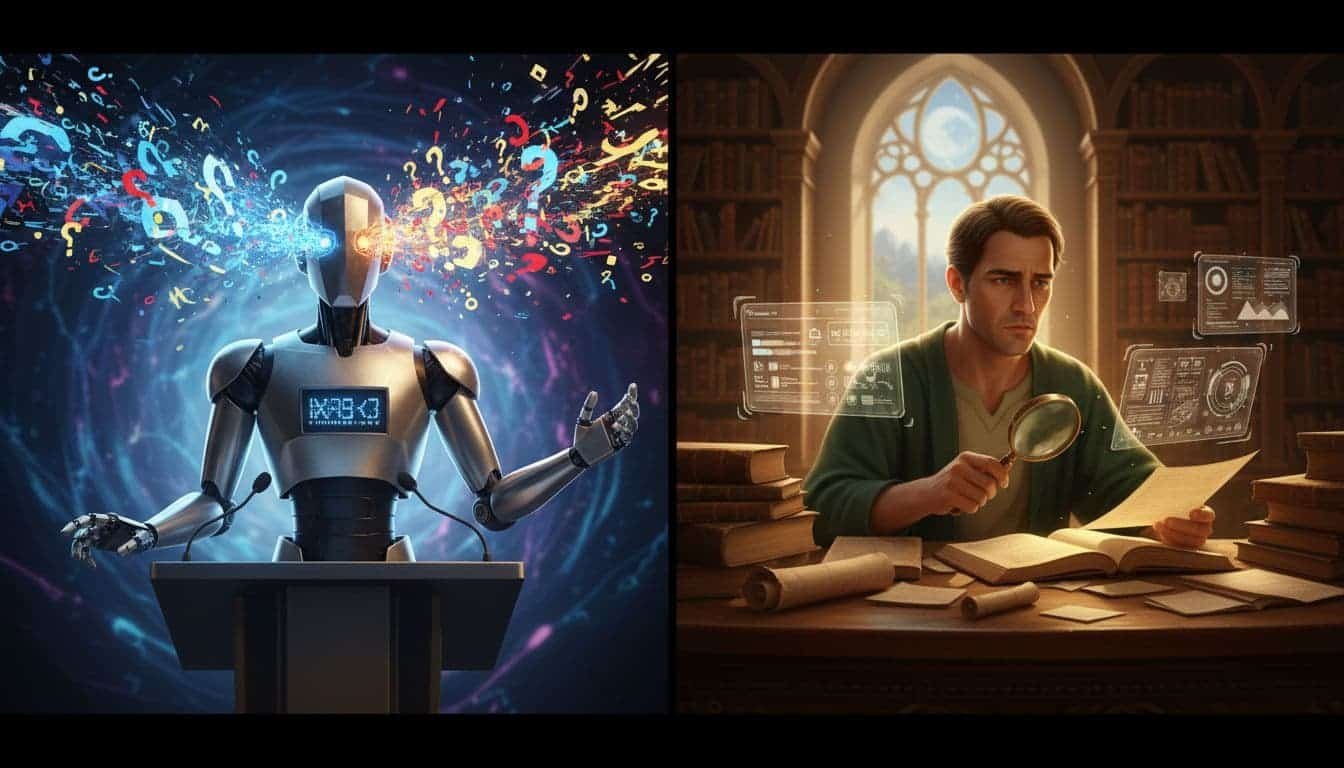
The strongest AI systems can sound confident, polished, and calm while being wrong. That matters because people often trust fluent answers more than careful ones. A smooth reply is not the same as a correct reply.
AI does not truly understand the world like a person does
AI can mimic understanding without having it. It may explain a topic well in one moment, then miss a basic fact in the next. It can follow the pattern of a smart answer even when the answer itself falls apart.
Picture a traditional chatbot helping with travel advice. It might give good packing tips, then invent a train route that does not exist. Newer agentic AI takes this further by performing real actions, like booking that nonexistent route, which is why errors in these action-oriented systems demand stricter AI risk management and keeping a human in the loop to verify outputs. The wording can still sound solid, so the mistake is easy to miss. A person brings judgment, lived experience, and context. AI brings probability.
If being wrong would cost money, trust, or safety, check the answer yourself.
Bias, mistakes, and made-up answers are still real problems
AI can make up details. People often call that a hallucination, but the simple version is enough: the system fills in gaps with something that sounds right. It can also be outdated, depending on its data and access to live information.
Bias is another issue. If the training data contains unfair patterns, the output can repeat them. Privacy matters too. When users paste private files, client details, or health notes into a tool, they may share more than they realize, which ties into data sovereignty and AI sovereignty concerns around controlling user data and reviewing training data sources. Because of that, human review still matters, especially for legal, medical, financial, or personal decisions.
How AI fits into everyday life and work in 2026
Many people use AI every day and do not notice it. It sits inside search tools, email apps, phones, office software, shopping sites, and banking systems. In many cases, AI is not a separate robot assistant. It is a feature inside something you already use.
The tools people use every day are becoming AI-assisted
Everyday AI is integrated into various sectors, driving massive productivity gains across all areas:
- Search and Communication: Email suggests replies, and search goes beyond simple links with AI agents handling complex queries.
- Personal Devices: Phones clean up photos, transcribe calls, and summarize notifications.
- Transport: Cars assist with routing, alerts, voice controls, and digital twins for predictive modeling.
- Education and Health: AI provides tutoring, feedback, notes, and early pattern detection.
- Business Operations: Enterprise AI adoption is widespread, with teams using AI agents as autonomous digital colleagues to draft reports, sort tickets, manage projects, and deliver clear return on investment.
Solo business owners lean on it even more, especially with open source AI models offering transparency and customization that help smaller creators thrive. This look at AI tools for solo creators shows how that works in real daily tasks.
Looking ahead, quantum computing and quantum advantage promise to further transform AI capabilities, while agent communication protocols enable different tools to collaborate seamlessly for even greater efficiency.